How my Mac edits our photo studio's reels every night
Reel 36 · step-by-step guide · October 21, 2026
One reel it made got about 100,000 views on TikTok. No human touched the edit. This page is an overview of the loop, not our code.
The guide · 7 parts
- 01
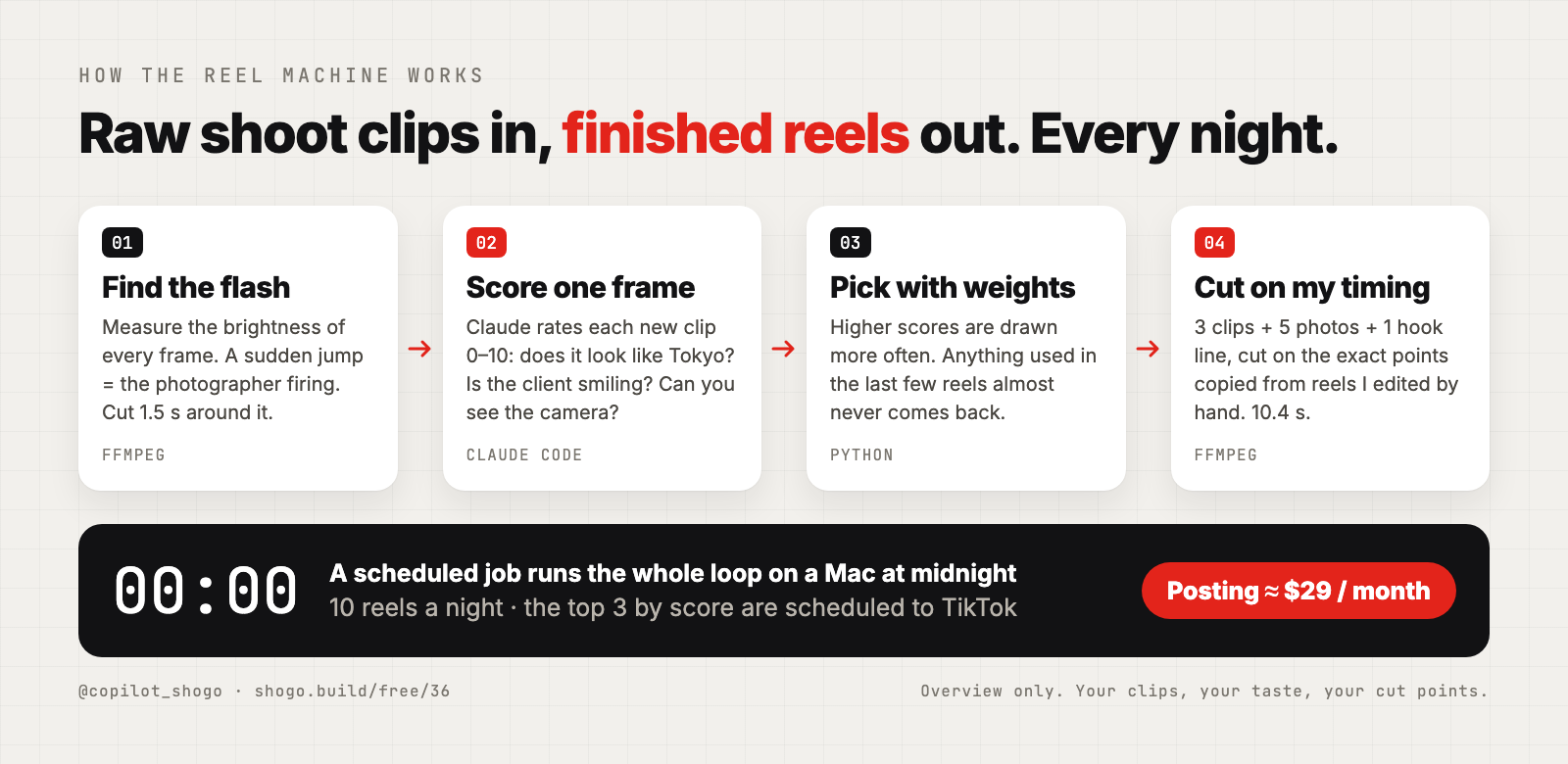
The whole loop
Raw clips and finished photos go into one shared folder. A scheduled job on a Mac runs this every night at midnight:
The loop - 02
1. Find the flash
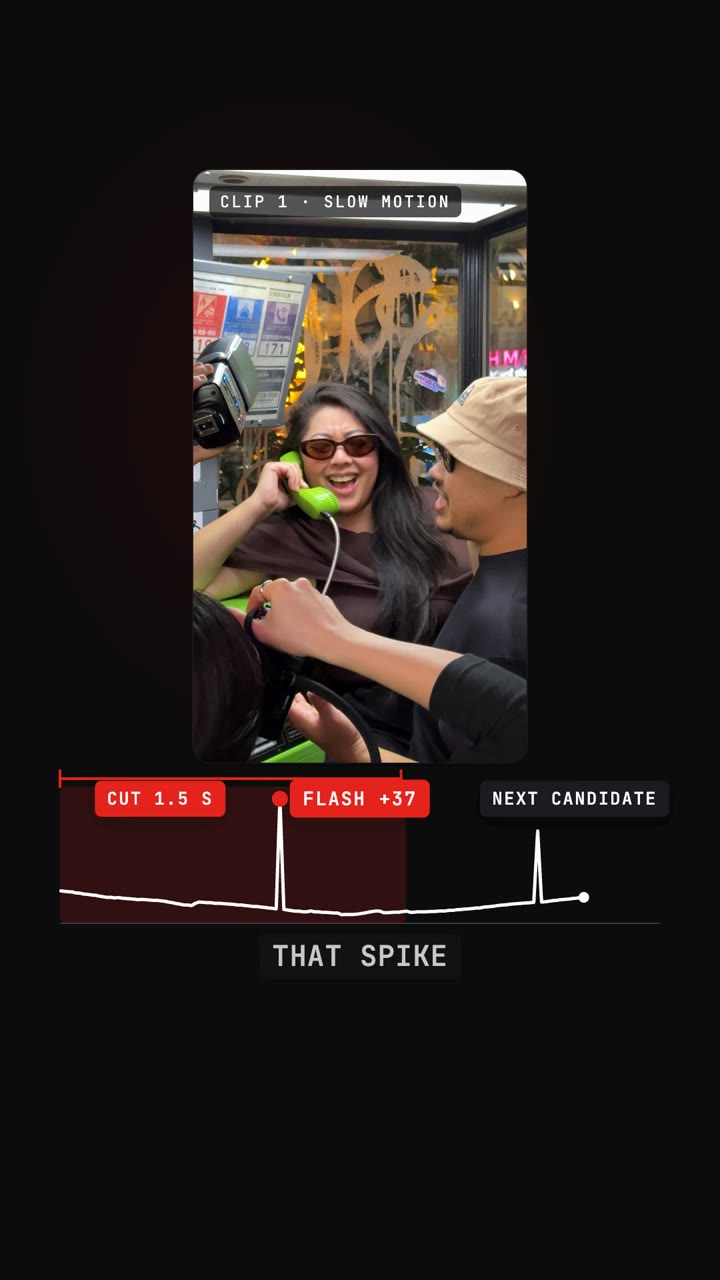
Our photographers shoot behind-the-scenes clips while they fire a flash. FFmpeg measures the average brightness of every frame. When one frame is suddenly much brighter than the frames around it, that is the flash: the moment the photo was taken.
The script cuts a short window around that spike (about a second and a half), with the flash a little past the middle, so every clip lands on the click of the shutter.
The real brightness of one clip - 03
2. Let Claude score one frame
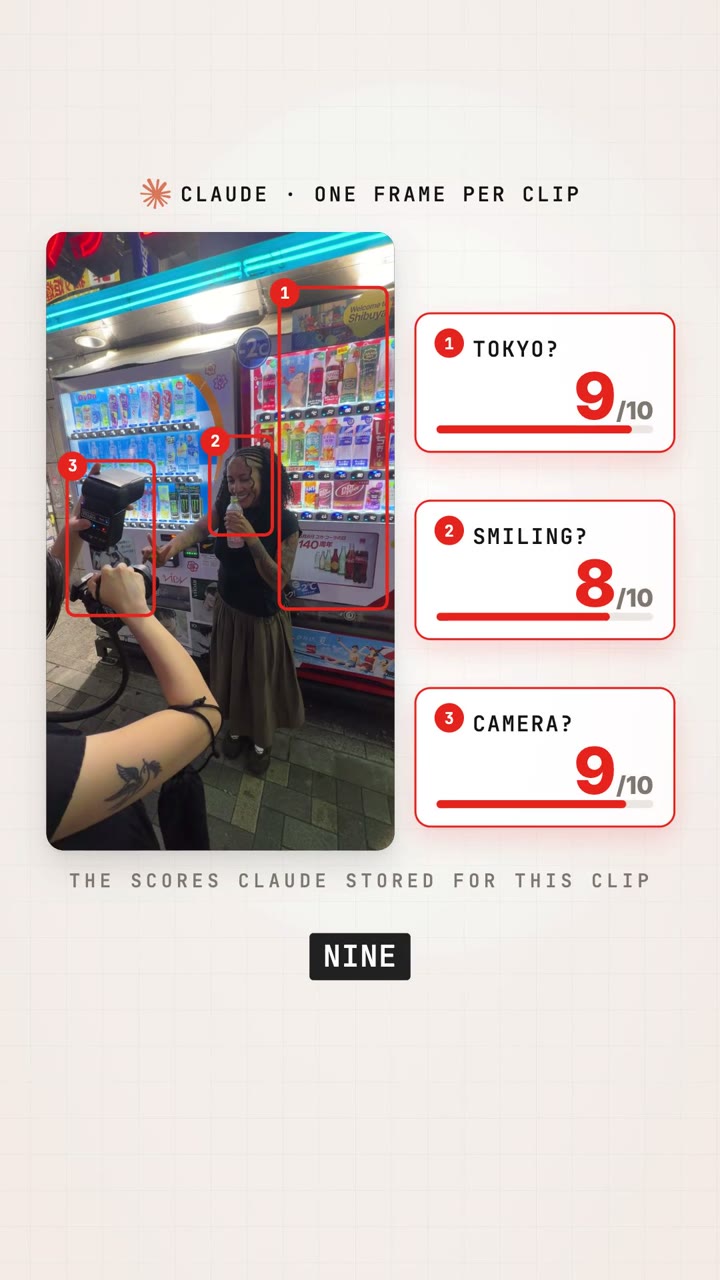
A picture of each new clip goes to Claude with three questions, each scored 0 to 10: does the background look like Tokyo, is the client clearly visible and smiling, and can you see the photographer, camera or flash. The scores are saved, so each clip is only scored once.
One clip: 9 · 8 · 9 - 04
3. Pick with weights, not at random
- Clips with a flash and higher scores are drawn more often.
- Anything used in the last few reels is pushed almost to zero, so the feed doesn't repeat itself.
- A combination that overlaps too much with an earlier reel is drawn again.
- 05
4. Cut on your own timing
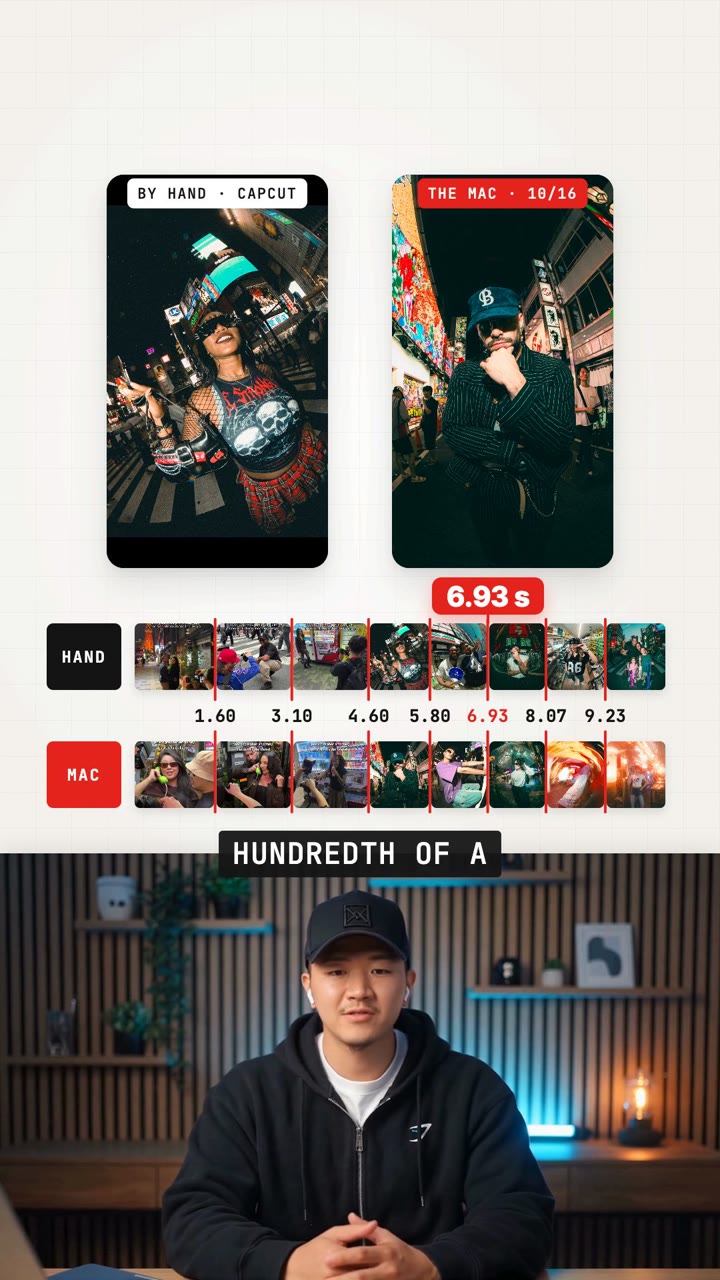
This is the part that made it look right. Before writing any code, I edited a few reels by hand in CapCut. They kept the same rhythm, so I measured the cut points and copied them exactly, down to the hundredth of a second. Every reel the machine makes uses that rhythm: 3 clips, 5 finished photos, 1 hook line, about 10 seconds.
Hand edit vs the machine - 06
5. Post the top three
Every night it makes 10 reels, checks that each file plays, and schedules the 3 with the best scores to TikTok at spread-out times, each with a caption from a rotating set.
- 07
Build your own
- Edit by hand first. Automate the pattern you already have, not one you imagine.
- Let numbers decide where to cut (the flash) and let the model decide what is good (the scores).
- Keep a record of what each reel used, so the next night can avoid it.
- Start with posting a few a day. More is not better on a new account.
Good to know
- Results vary: most reels get far fewer views than the best one.
- An overview by @copilot_shogo. Not affiliated with any of the tools above.
Free for people building with Claude Code
Two of us run a six‑figure business on this Claude Code setup.
Most setups forget who you are every session. This one knows your goal, pushes back when you drift, and checks its own work. Take the starter version. It takes 15 minutes to set up.
✻
CLAUDE.md
- START-HERE.md
- CLAUDE.md
- prompts/interview.md
- agents/verifier.md
- diagnostic.md
Confirm your email and the download starts. One email a week after that, unsubscribe any time.
MORE LIKE THIS